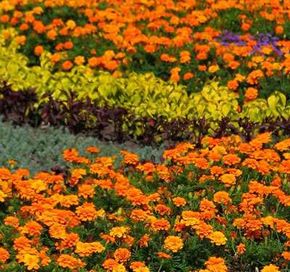
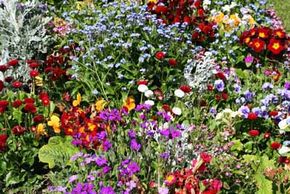
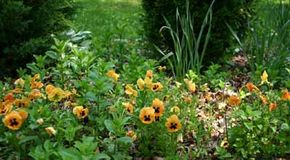
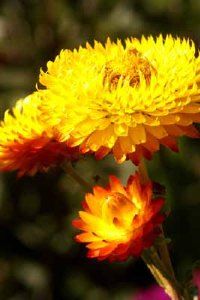
Before you plant your annuals garden, you'll want to actually sketch out your garden plan. It is seldom possible to create an attractive annuals garden simply by planting out boxed plants or flower seeds without any plan. More often than not, this approach will produce unsatisfactory results. You need advance planning. Without it, it's easy to slip up and be disappointed.
Draw a quick outline of your garden bed, noting down its approximate dimensions and the amount of sun the area receives each day. Also list the names of your favorite annuals so you'll be sure to include most, if not all, of them in your plan.
The next step is to look up your favorites and to note the colors they come in and their growth habits. Mark down whether they prefer full sun, partial shade, or full shade. Also specify how tall they grow (T=tall, I=intermediate, L=low, V=vining).
Check to see if any of your favorites prefer a different amount of sun than your site has available; cross out those that aren't suitable. In other words, if you love impatiens, but your bed is in full sun, only New Guinea impatiens will succeed there. (Since other varieties of impatiens do not tolerate full sun, you may want to see if there's a shady location elsewhere in the yard or on a covered porch where you can enjoy a few instead.)
If you have very few favorites and a large space to fill, add a second list of annuals that you find attractive and that fit the light and color limitations of your site. Use seed catalogs to help choose the variety of petunia, marigold, snapdragon, or whatever, with the color and height you want. Be sure to note down several variety names and sources if a plant comes in more than one desirable color.
Use colored pencils to color in planting sections within your bed outline. A more informal and interesting design will result if you vary the size and shape of these sections. Then decide which plants should go into what sections of your plan. Remember to keep tall plants in the back and low plants up front, filling in with intermediate heights. That way none of the plants will be blocked from view. If a bed is going to be in an area where it will be seen from all sides, the tallest plants should be in the center of the bed with low ones around the outer edges.
As you plan, be sure flower colors in adjacent sections vary but don't clash. Maintain a balance of color in the bed -- avoid placing all the same-colored flowered plants on one side. In large beds, repeat the same variety in several sections, making the sections much larger than you would in smaller beds.
Once you've decided what will go in each section, double-check to be sure you haven't inadvertently made a mistake -- such as putting a tall plant up front or all the marigolds in one area. If you have, it's easy to change on paper.
Once the plan is in its final form, you can then figure out approximately how many plants you'll need of each kind to fill the allotted space. This will help in ordering seeds for sowing or starting and in buying boxed bedding plants.
Caution: If you plan to buy bedding plants rather than grow your own, remember that the variety of plants available will be limited. It might be best to visit suppliers and make a list of what colors and kinds of plants they have available before making your garden plan. That way you won't have to settle for substitutions or totally redo your garden plan.
Some gardeners like to mix their annuals with perennials, shrubs, or trees. If that's your plan, keep reading to learn about mingling annuals with other plantings.
Want more information about gardening with annuals? Try these:
- Annual Flowers: Plant these beauties for flowers all summer long.
- Annuals: Learn about all the different types of annual plants.
- Garden Care: Annuals: Find out how to care for the annuals in your garden.
- Gardening: Learn the basics of successful gardening.