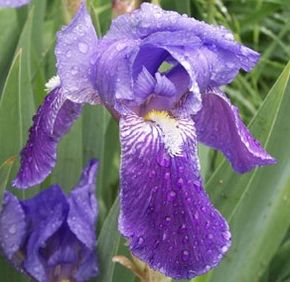
Not that the beardless irises aren't lovely as well! There are two main varieties to choose from:
Siberian Iris (Iris sibirica)
The Siberian Iris stands out with its elegant, butterfly-like flowers and slender, grassy foliage. These irises flourish in moist conditions, adapting well to wetter climates, making them ideal for water gardens or damp areas. Their resilience and graceful appearance make them a cherished addition to any garden setting.
Japanese Iris (Iris ensata)
Japanese Iris is distinguished by its large, flat blooms, often found gracing the edges of ponds and water features. These irises favor acidic, boggy soils and are celebrated for their exotic, watercolor-like flowers, offering a unique aesthetic different from other iris types.
Dutch Iris (Iris x hollandica)
Dutch Iris, known for its elegant and slender profile, typically showcases blue or purple flowers. These irises are a popular choice in the cut flower industry due to their long, sturdy stems and striking colors.
These showy flowers flourish in well-drained soil and are relatively easy to grow, making them a favorite for both gardeners and florists.
Louisiana Iris (Iris brevicaulis)
Louisiana Irises, native to the southern United States, are a vibrant spectacle often found in wetland areas. They thrive in moist, acidic soils, and their array of colors can range from deep blues to bright yellows. This type of iris adds a touch of southern charm and color to water gardens and naturalized pond settings.