Carbohydrates
You have probably heard of "carbohydrates" and "complex carbohydrates." Carbohydrates provide your body with its basic fuel. Your body thinks about carbohydrates like a car engine thinks about gasoline.
The simplest carbohydrate is glucose. Glucose, also called "blood sugar" and "dextrose," flows in the bloodstream so that it is available to every cell in your body. Your cells absorb glucose and convert it into energy to drive the cell. Specifically, a set of chemical reactions on glucose creates ATP (adenosine triphosphate), and a phosphate bond in ATP powers most of the machinery in any human cell. If you drink a solution of water and glucose, the glucose passes directly from your digestive system into the bloodstream.
Advertisement
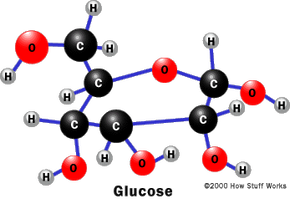
The word "carbohydrate" comes from the fact that glucose is made up of carbon and water. The chemical formula for glucose is:
You can see that glucose is made of six carbon atoms (carbo...) and the elements of six water molecules (...hydrate). Glucose is a simple sugar, meaning that to our tongues it tastes sweet. There are other simple sugars that you have probably heard of. Fructose is the main sugar in fruits. Fructose has the same chemical formula as glucose (C6H12O6), but the atoms are arranged slightly differently. The liver converts fructose to glucose. Sucrose, also known as "white sugar" or "table sugar," is made of one glucose and one fructose molecule bonded together. Lactose (the sugar found in milk) is made of one glucose and one galactose molecule bonded together. Galactose, like fructose, has the same chemical components as glucose but the atoms are arranged differently. The liver also converts galactose to glucose. Maltose, the sugar found in malt, is made from two glucose atoms bonded together.
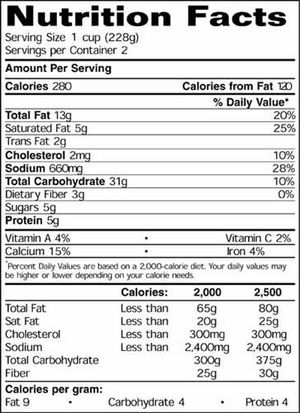
Glucose, fructose and galactose are monosaccharides and are the only carbohydrates that can be absorbed into the bloodstream through the intestinal lining. Lactose, sucrose and maltose are disaccharides (they contain two monosaccharides) and are easily converted to their monosaccharide bases by enzymes in the digestive tract. Monosaccharides and disaccharides are called simple carbohydrates. They are also sugars -- they all taste sweet. They all digest quickly and enter the bloodstream quickly. When you look at a "Nutrition Facts" label on a food package and see "Sugars" under the "Carbohydrates" section of the label, these simple sugars are what the label is talking about.
There are also complex carbohydrates, commonly known as "starches." A complex carbohydrate is made up of chains of glucose molecules. Starches are the way plants store energy -- plants produce glucose and chain the glucose molecules together to form starch. Most grains (wheat, corn, oats, rice) and things like potatoes and plantains are high in starch. Your digestive system breaks a complex carbohydrate (starch) back down into its component glucose molecules so that the glucose can enter your bloodstream. It takes a lot longer to break down a starch, however. If you drink a can of soda full of sugar, glucose will enter the bloodstream at a rate of something like 30 calories per minute. A complex carbohydrate is digested more slowly, so glucose enters the bloodstream at a rate of only 2 calories per minute (reference).
You may have heard that eating complex carbohydrates is a good thing, and that eating sugar is a bad thing. You may even have felt this in your own body. The following quote from The Yale Guide to Children's Nutrition's explains why:
If you think about it, this is incredibly interesting because it shows that the foods you eat and the way you eat them can affect your mood and your temperament. Foods do that by affecting the levels of different hormones in your bloodstream over time.
Another interesting thing about this quote is its mention of insulin. It turns out that insulin is incredibly important to the way the body uses the glucose that foods provide. The functions of insulin are:
- To enable glucose to be transported across cell membranes
- To convert glucose into glycogen for storage in the liver and muscles
- To help excess glucose be converted into fat
- To prevent protein breakdown for energy
According to the Encyclopedia Britannica:
What you can begin to see from this description is that there are actually lots of different things happening in your body around glucose. Because glucose is the essential energy source for your body, your body has many different mechanisms to ensure that the right level of glucose is flowing in the bloodstream. For example, your body stores glucose in your liver (as glycogen) and can also convert protein to glucose if necessary. Carbohydrates provide the energy that cells need to survive.
For more information on carbohydrates, glucose and insulin, check out the links at the end of this article.