
Orchids are a large, exciting family of about 20,000 species and thousands upon thousands of horticultural varieties. They vary greatly in size of plants, color of flowers, and growing habits.
In nature, orchids grow from the equator to the arctic. They grow in the ground (terrestrial), on top of trees, rocks, or telephone poles (epiphytic), or both. Most of the orchids grown indoors originally came from tropical and subtropical areas where they had good air circulation, brisk nights, and excellent drainage. In fact, those that come from high altitudes prefer cool nights and are not happy with high temperatures during the day. Some are very fragrant: vanilla extract is made from the seed pod of the vanilla orchid.
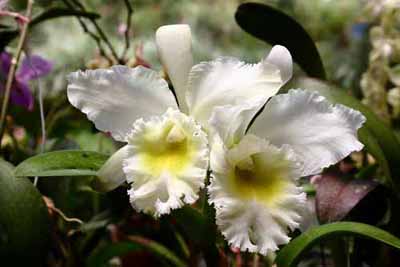 This cattleya orchid is just one of the many beautiful options you have for growing orchids indoors. |
As a hobby plant, the orchid is the child of the 19th century. The word orchid first appeared in Lindley’s School Botany in 1845. At this time, the tax on glass and windows was abolished in England. That, combined with better transportation of live plants, encouraged wealthy hobbyists to give house plants a try.
Although orchids are tough and quite adaptable, their reputation for being both expensive and difficult to grow came from this period in history. Many of the plants did not take sea travel too well. Those that survived an ocean voyage were taken home by people determined to give them the best of everything. Usually, this meant 100% relative humidity, 90°F temperatures, and not a single breath of fresh air. Even the toughest orchids could not survive that kind of treatment for more than a year.
With minimum care, an orchid plant can grow on for generations. When beginning to grow orchids, start with a mature plant (in bud) of a variety that is easier to grow. Do not judge the plant by its looks alone. Most plants are downright plain, but the flowers are glorious. It's also important to note that not all orchids grow well indoors. However, so many do that one can afford to ignore those that do not.
Still think growing orchids sounds like a challenge? Not to worry, as you read through this article, you'll find out all you need to know:
Orchid Vocabulary: Learn the parts of the plant and the basic terms often used in discussing orchids, so you'll be prepared to join any orchid discussion.
Temperature Requirements of Orchids: Sure, they're hardy, but that doesn't mean orchids don't have preferences. Find out the different day- and night-time temperatures assorted orchids enjoy.
Light Requirements of Orchids: The right amount of light is key to producing flowers, so these are instructions you won't want to miss.
Watering Orchids: In the wild, orchids simply wait for rain, so in your home they may require less watering than you think.
Potting Orchids: Potting -- and repotting -- is a bit of a different endeavor with orchids than it is for other house plants. Here you'll learn the proper procedure to keep your orchids healthy and growing.
Fertilizing Orchids: Proper fertilizing technique can vary widely, depending on type of plant, time of year, and potting medium used. Get some pointers on how to proceed.
Orchid Care: Whether you're an old pro looking for a quick brush up on orchid care or a new collector in need of a handy review of the essentials, this page can help.
Propagating Orchids: Learn a bit about the tricky process that is growing orchids from seed and pick up tips for the much simpler plant-division method.
Types of Orchids: Now that you've learned how to keep orchids alive and blooming, survey your options and begin deciding what your collection will include. Or, if you're looking for a new orchid to add, this page has plenty of ideas.
Ready to get started? Continue to the next page to begin your orchid odyssey with a quick vocabulary lesson.
Check these resources to find more ideas and information on placing plants around your house:
- Gardening: Whether it's vegetables, flowers, or foliage you're considering, the facts you'll need are here. Learn all the basics of successful gardening.
- House Plants: Wondering what might look nice in your kitchen window? Find out which plants are happiest inside the house.
Advertisement


