
Using Dry Plants in Flower Arrangements
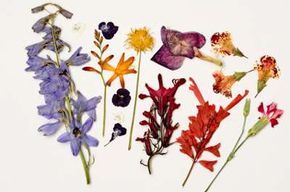
Look around at weeds, seeds, cones, and twigs. Collect dried plant material with interesting colors, shapes, and textures. Driftwood from the beach, or seedpods from the flower garden or roadside can make semi-permanent, natural arrangements for dark or drafty places where live plants and flowers have a hard time.
Small flowered plant materials such as baby's breath, statice, and yarrow can often be dried by collecting them in small bunches and hanging them in a dry place for several days to several weeks.
Advertisement
Large flowered material can often be preserved by providing support while the moisture evaporates. In the old days, this was done by using clean, dry sand or borax. Now, specially formulated preserving compounds, such as silica gel, are available in craft shops, chain stores, or flower shops.
When preserving or drying flowers, the idea is to remove moisture while supporting the flower to keep as much of the original texture and shape as possible. Flowers should be preserved when they are at their peak or before, not after they have started their decline.
Drying time depends on the flower, its size, and the amount of humidity in the air. Three days is about average. Some small, light flowers can dry in a couple of days, and some heavy, moisture-filled blossoms can take a week.
Do not waste your time trying to preserve a dead or wilted flower. If you are cutting outdoor material, make sure it is dry. For maximum success, everything you use should be as dry as possible.
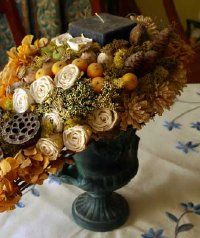
Dried materials can also be purchased. Some are natural plant materials collected in other parts of the world, and some are "make-believe" flowers constructed out of several natural materials.
Dried natural materials combine beautifully. Dyed materials have to be used much more skillfully. The easiest dried flower arrangements are made by inserting the "flowers" into a cloud of baby's breath or some other light, fill material. For more formal arrangements, wires can be inserted in to Styrofoam and bent to the desired shapes.
Dry material can also be very effective inserted into straw wreaths from chain stores or florist shops. These wreaths can be finished all at once, or they can be developed gradually as you add material collected from vacation trips, friends' gardens, or other pleasant places.
Dried flower arrangements are long lasting and are not only an attractive addition to your decor but also can bring back memories of happy times and places.
Success in drying flowers depends on many variables and is a matter of practice and experimentation. When flowers dry, their colors often change. Reds can turn almost black or fade to rose. Some oranges turn rose or red while others keep their color. Many whites turn ivory-cream while some keep their original color. Many blues turn lavender or just fade to a lighter shade of blue.
Want to send flowers but not the wrong message? Learn about the significance of flowers in the next section.
Inspired by cut flowers? To learn more about gardening, see: