How to Remove Stamp Pad, Ballpoint Pen, and Ink Stains
Try not to explode along with your pen. The written word can seem to live on forever but an ink stain doesn't have to be permanent. Use the following tips for optimal ink stain removal from most materials or surfaces.Remove Ink Stains From:
Acetate, Burlap, Carpet/Synthetic, Carpet/Wool,
Fiberglass, Rayon, Silk, Triacetate, Wool
Sponge (the method of using light strokes with a dampened pad working outward from the center of the stain) the stain with water. Try a light spray of hair spray to loosen the stain, then apply a wet spotter and a few drops of white vinegar. Let stand for 30 minutes, blotting every 5 minutes with a clean absorbent pad. Add wet spotter and vinegar as needed to keep the stain moist. Flush (the method of applying stain remover to loosen staining materials and residue from stain removers) with water. If the stain persists, apply rubbing alcohol to the stain and cover with an absorbent pad moistened with alcohol. Let it stand as long as any stain is being removed. Change the pad as it picks up the stain. Flush with alcohol. (Do not use alcohol on acetate, rayon, or triacetate.) If stain traces remain, sponge area with water and apply a wet spotter and a few drops of ammonia. Let stand for 30 minutes, blotting every 5 minutes. Add enough wet spotter and ammonia (do not use ammonia on silk or wool) to keep the stain moist. Flush with water and allow to dry.
To make a dry spotter, combine 1 part coconut oil (available at pharmacies and health food stores) and 8 parts liquid dry-cleaning solvent. This solution may be stored if the container is tightly capped to prevent evaporation of the solvent. Mineral oil may be substituted for the coconut oil, but is not quite as effective. Caution: Dry-cleaning solvents are poisonous and may be flammable. Wet spotter: To prepare a wet spotter, mix 1 part glycerine, 1 part white dishwashing detergent, and 8 parts water. Shake well before each use. Store wet spotter in a plastic squeeze bottle. |
Acrylic Fabric, Cotton, Linen, Modacrylic,
Nylon, Olefin, Polyester, Spandex
Try a light spray of hair spray to loosen the laundry stains. Soak in a solution of 1 quart warm water, 1/2 teaspoon dishwashing detergent, and 1 tablespoon white vinegar for 30 minutes; use care when using vinegar on cotton and linen. Rinse with water and allow to dry. If Stain persists, apply rubbing alcohol to the stain and cover with an absorbent pad moistened with alcohol (use alcohol sparingly on acrylic and modacrylic). Let stand as long as any stain is being removed. Change pad as it picks up the stain. Keep both the stain and pad moist with alcohol. Flush with alcohol and allow to dry. If any trace of stain remains, soak in a solution of 1 quart warm water, 1/2 teaspoon dishwashing detergent, and 1 tablespoon ammonia for 30 minutes. Rinse thoroughly with water and allow to dry.
Remove Ink Stains From:
Acrylic Plastic, Ceramic, Glass/Tile, Cork, Glass,
Plexiglas, Polyurethane, Porcelain Dishes,
Porcelain Fixtures, Vinyl Clothing, Vinyl Wallcovering
Apply an all-purpose spray cleaner, following label directions. If any trace of stain remains, cover area with a compress sprinkled with ammonia. Rinse well and wash with a cloth dipped in warm sudsy water. Rinse again and allow to dry.
Remove Ink Stains From:
Alabaster, Marble
Wipe the surface with a cloth or sponge dipped in warm sudsy water. Rinse well and wipe dry. If any trace of stain persists, apply an absorbent pad dampened with rubbing alcohol. After several minutes, replace the pad with one moistened with ammonia. Continue alternating alcohol and ammonia treatment until stain is removed. Rinse well and wipe dry.
Remove Ink Stains From:
Asphalt, Bluestone, Brick, Concrete, Flagstone,
Sandstone, Slate, Terrazzo
Wash with a solution of washing soda or detergent (not soap) and water. Use a cloth or soft-bristled brush to help scrub. Rinse thoroughly with clear water and allow to dry.
Remove Ink Stains From:
Bamboo, Cane, Paint/Flat, Paint/Gloss
Wipe with a cloth dipped in a solution of mild pure soap and water to which a few drops of ammonia have been added. Rinse well and dry thoroughly.
Remove Ink Stains From:
Grout
Wipe stain with a cloth dipped in warm sudsy water. If a stain remains, dip a wet toothbrush into a litle baking soda or powdered cleanser and gently scrub. Rinse well and wipe dry.
Remove Ink Stains From:
Leather, Suede
On leather, apply a cleaner, Tannery Vintage Leather Cleaner & Conditioner. On suede, try gingerly applying a dry-cleaning solvent. Dab it on with a clean cloth, after testing on a hidden seam. Allow to air dry. On leather only, follow with Tannery Vintage Leather Cleaner & Conditioner or Fiebing's Saddle Soap to condition the leather. Caution: There is no guaranteed way to remove this stain from these materials.
Remove Ink Stains From:
Linoleum, Vinyl Tile
First, apply an all-purpose spray cleaner according to package directions. If any stain remains, cover the area with a compress made with rubbing alcohol. Rinse with clear water. If stain persists, rub the area with superfine (number 0000) steel wool dipped in liquid floor wax. Wash the area with soapy water, dry, then wax as usual.
Remove Ink Stains From:
Wallpaper
Try removing any ink with a soft eraser. Work in small movements to avoid tearing the paper. If the stain persists, wipe the area with a cloth or sponge moistened with cool clear water. Overlap the strokes to avoid streaking. Use a clean cloth to gently pat dry.
Remove Ink Stains From:
Wood
Mix dishwashing detergent in hot water and swish to make a great volume of suds. Dip a cloth in only the foam and gently wipe the stain. Rinse with a clean cloth moistened with clear water. If a stain remains, rub the area with superfine (number 0000) steel wool dipped in liquid wax. Rub lightly, because steel wool will remove a fine layer of the surface. Polish or wax as soon as possible.
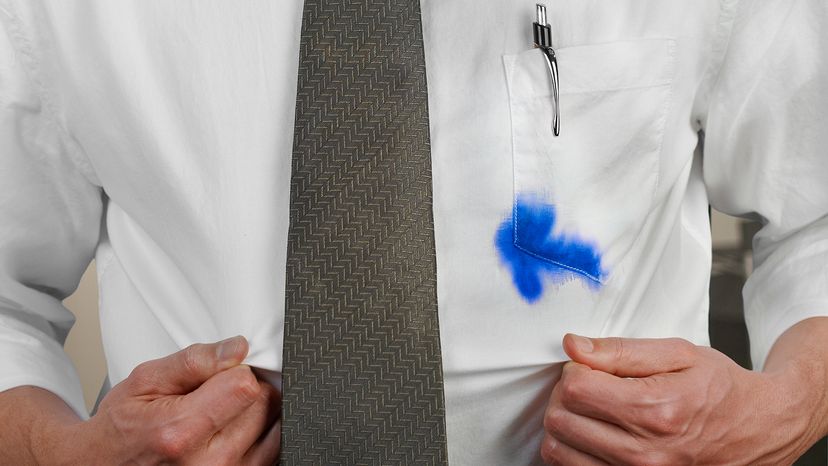
The last time, your leaky ballpoint pen left an embarrassing stain. Next time use these cleaning methods so you can experience a better ending.