
Replacing Range Heating Elements
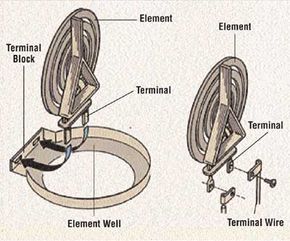
When a range heating element burns out, it's easy to replace. But before you disassemble the range to check or replace an element, make sure the range is receiving power. Here's what you can do:
Step 1: Check the power cord, the plug, and the outlet. Then look for blown fuses or tripped circuit breakers at the main entrance panel or at a separate panel.
Advertisement
Step 2: Check the fusing system inside the range. If the circuit is broken, restore it. If the range is receiving power, go on to check the element.
Step 3: When the element is cool, remove it. In most ranges, each top heating element is connected to a terminal block in the side of the element well. To remove the terminal block, lift the element and remove the metal drip pan that rests below it. The element is held by two retaining screws or is push-fit into the terminal block. To remove a screw-type element, remove the screws holding the wires. To remove a push-type element, pull the element straight out of its connection.
Step 4: Test the element with a volt-ohm-milliammeter (VOM) set to the RX1 scale. Disconnect one of the electrical leads to the element and clip one probe of the VOM to each element terminal. If the element is functioning properly, the meter will read between 40 and 125 ohms; if the meter reads extremely high, the element is faulty and should be replaced.
To test a range element without using a VOM, remove a working element from its terminal block and connect it to the malfunctioning element terminal. Don't let the test element overlap the edges of the element well; keep the element inside the well, even if it doesn't fit perfectly. Turn on the power to the range. If the working element heats, the suspected element is bad and should be replaced. If the working element doesn't heat, the terminal block wiring or the switch that controls the element may be faulty. Call a professional service person.
Step 5: Replace a burned-out range element with a new one made specifically for the range. Take the old element to the appliance-parts store; if possible, take the make and model information, too. This data will probably be on a metal tag attached to the back service panel of the range. To install the new element, connect it the same way the old one was connected.