
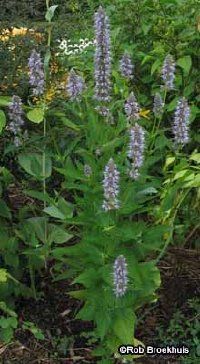
Hyssop, or anise hyssop, belongs to the genus Agastache, which includes 20 or more species of varying appearance and cold hardiness. Many are native to the American Southwest and Mexico. Most are fragrant and smell like licorice. All are excellent nectar sources for butterflies and hummingbirds.
Description of hyssop: These herblike perennials are showy and somewhat tender. Most are bushy and sport long, airy spikes of brightly colored, tubular-shaped flowers that bloom in late summer or early fall.
Advertisement
How to grow hyssop: Hyssop grows easily in well-drained, alkaline soil and is adapted to rocky soil. Some types are very drought tolerant but all flower better if they receive adequate rainfall or supplemental water. Hyssop will not tolerate wet soil in the winter. They love hot weather and grow best in areas with warm summers.
Propagating hyssop: By seed.
Uses for hyssop: Mix with other sun-loving perennials such as Russian sage, butterfly bush, yarrow, blue mist spirea, and boltonia. This is an excellent plant for attracting hummingbirds and butterflies.
Hyssop related species and varieties: Agastache cana, Texas hummingbird mint, has raspberry pink flowers. It grows 24 to 36 inches tall and 18 inches wide, through growing Zone 5. Agastache x 'Blue Fortune' bears large, 5-inch-long powder blue flower spikes for many weeks through growing Zone 6. Agastache rupestris, licorice mint or sunset hyssop, blooms midsummer through fall up through growing Zone 5 with spikes of two-toned orange and purple flowers. 'Tutti Frutti' has a wonderful fruity-sweet scent.
Scientific name for hyssop: Agastache species
Advertisement