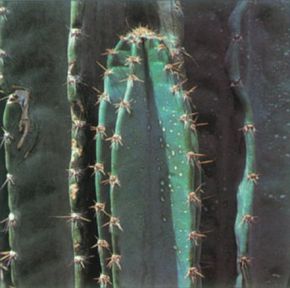
Peruvian apple cactus looks very much like the cacti that most people invariably think about when they hear the word cactus. Tall, spiny, and green, it makes for a great indoor plant -- even in places where it does not actually thrive.

Picture of a typical cactus, Peruvian apple cactus.
A classic cactus: Peruvian apple cactus.

The species is a typical columnar cactus with green to blue-green stems and clusters of brown spines rising from cushiony areoles along well-defined ribs. The variety called curiosity plant, which sports bizarre knoblike protuberances, is frequently sold.

The Peruvian apple cactus is often used as a living sculpture in totally inappropriate conditions, surviving for years with no growth and rarely needing any water -- then it suddenly rots and dies. In full sun it will grow quite rapidly. The sweetly scented, night-blooming flowers are unfortunately rarely produced indoors.

Peruvian Apple Cactus Quick Facts

Scientific Name: Cereus Peruvianus
Common Names: Peruvian Apple Cactus, Curiosity Plant
Light Requirement for Peruvian Apple Cactus: Full Sun to Filtered Light
Water Requirement
for Peruvian Apple Cactus: Drench, Let Dry
Humidity
for Peruvian Apple Cactus: Average Home
Temperature
for Peruvian Apple Cactus: Cool
Fertilizer
for Peruvian Apple Cactus: High Phosphorus
Potting Mix
for Peruvian Apple Cactus: Cactus
Propagation of
Peruvian Apple Cactus: Seed, Stem Cuttings
Decorative Use
for Peruvian Apple Cactus: Floor, Table
Care Rating
for Peruvian Apple Cactus: Easy

Want to learn about house plants by type? Try these:

Learn how to care for house plants:

ABOUT THE AUTHOR:

Larry Hodgson is a full time garden writer out of Quebec City in the heart of French Canada where he grows well over 3,000 species and varieties. His book credits include Making the Most of Shade, The Garden Lovers Guide to Canada, Perennials for Every Purpose, Annuals for Every Purpose, Houseplants for Dummies, and Ortho's Complete Guide to Houseplants, as well as other titles in English and French. He's the winner of the Perennial Plant Association's 2006 Garden Media Award.