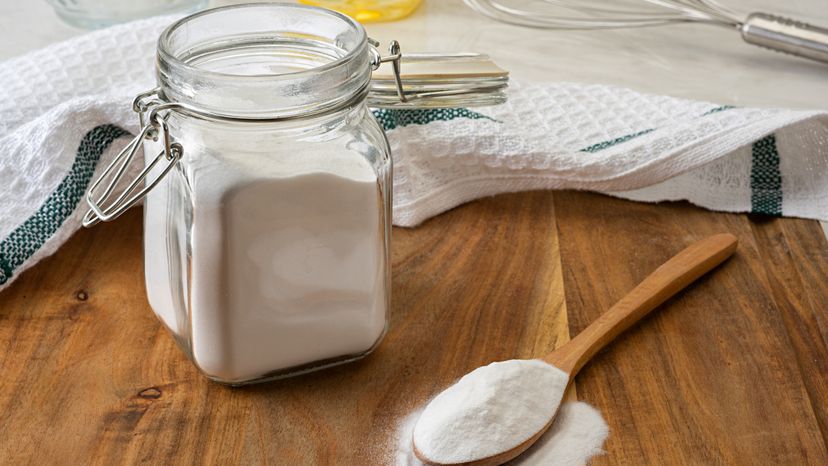
Using Baking Soda in the Kitchen

Baking soda can safely tackle kitchen jobs above and beyond the legendary box at the back of the refrigerator. Once you discover the versatility of baking soda, you'll do away with all those cleaners under your sink, and you'll never use oven spray again. In this article, we'll examine the numerous ways baking soda can be used in the kitchen, besides cooking. Let's start with surfaces.

Rubber, Plastic, and Wood

A baking-soda paste removes stains from plastic and rubber utensils. Apply the paste with a scouring pad or sponge.

You can scrub stained plastic storage containers with a paste of lemon juice and baking soda.

Renew old sponges, nylon scrubbers, and scrub brushes by soaking them overnight in a solution of 4 tablespoons baking soda to 1 quart water.

Deodorize and remove stains from wooden bowls or utensils with a baking-soda solution.

Shiny Surfaces

Stainless-steel sinks and other surfaces can be cleaned with a baking-soda paste or by sprinkling baking soda directly onto a sponge or clean cloth and scrubbing the surface. Rinse the surface and buff it dry.

Clean the exterior of your refrigerator and most other surfaces in your kitchen using the General Purpose Cleanser (see below).

Countertops

Abrasive cleansers may scratch Formica. Instead, use the General Purpose Cleanser (see below).

Remove stains on laminated countertops with a baking-soda paste. Apply the paste, let it dry, then rub it off and rinse the surface.

Clean a countertop made of tile and grout with a mixture of 1/2 cup vinegar, 1 cup clear ammonia, 1/4 cup baking soda, and 1 gallon warm water. Apply the mixture with a sponge. Be sure to protect your hands with rubber gloves.

General Purpose Cleaner with
Baking Soda
This homemade concoction can replace most of the commercial cleaners you probably have on your shelf.
  • 1 tsp borax
  • 1 tsp baking soda
  • 2 tsp vinegar or lemon juice
  • 1/4 tsp liquid dish soap
  • 2 cups hot water
Be sure to wear rubber gloves when working with this mixture. Mix and store in a squirt or spray bottle.

Pots, Pans, and Cookware

Clean encrusted grease and food on roasting pans by dampening with hot water and sprinkling with baking soda. Let the pot sit for an hour, and sponge it clean.

To loosen baked- or dried-on food in the pans, gently boil water and baking soda in the pans. When the food is loosened, cool the pan and wipe it clean.

Enamel cookware can't handle abrasive cleaners. Apply a baking-soda paste and let sit for an hour, then clean with a synthetic scrubber, and rinse.

Remove stains from a nonstick pan by boiling 1 cup water, 2 tablespoons baking soda, and 1/2 cup liquid bleach in the pan for several minutes. Wash the pan as usual, and use cooking oil to reseason.

Cover burned-on stains on the cookie sheets with baking soda, then with hot water, and let soak for 10 minutes. Next, scour the sheet with baking soda and a scrubber.

Floors

Clean tile floors with 1/2 cup baking soda in a bucket of warm water. Mop the with the solution and rinse the floor clean.

Remove black heel marks on linoleum or vinyl floors with a damp sponge or scrubber dipped in baking soda.

Ovens and Stoves

Clean induction and glass stovetops with a baking-soda solution, using a toothbrush to get into tight corners. Wipe the stovetop clean.

For a thorough oven cleaning, leave 1 cup of ammonia in a cold, closed oven overnight to loosen dirt. In the morning, wipe away the ammonia, then wipe the surfaces with baking soda.

As you'll see in the next section, baking soda also can do a bang-up job as an aid for cleaning other parts of your kitchen.