If your Christmas tree looks more gloomy than glowing, you might be wondering how to fix Christmas lights.
Whether you're dealing with LED Christmas lights or older incandescent strands, the steps below will help you troubleshoot a light string that's gone dark—whether it's one bulb or half the string.
Make sure the string of lights is plugged in and receiving power. Try plugging it into a different outlet or testing a known working string in the same socket to confirm.
Examine the plug end and the male end for damage. Some Christmas light strings also have small fuses in the plug that may need to be replaced.
Advertisement
Step 2: Inspect for a Blown Fuse
Use a flathead screwdriver or small tool to open the fuse compartment in the plug. Most strings have two small fuses.
If one is blown, replace it with the same type and voltage. This simple fix can often restore power to the whole string.
Advertisement
Step 3: Look for a Bad Bulb
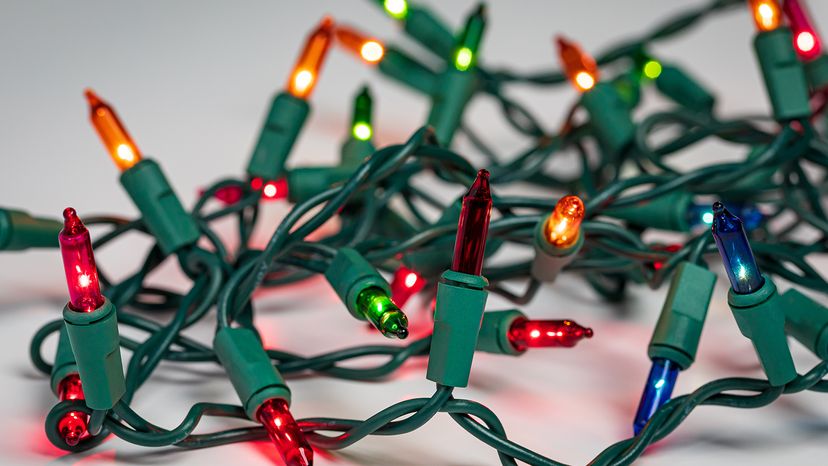
It would be so much easier to spot the one lit bulb instead. J.J. Gouin / Shutterstock
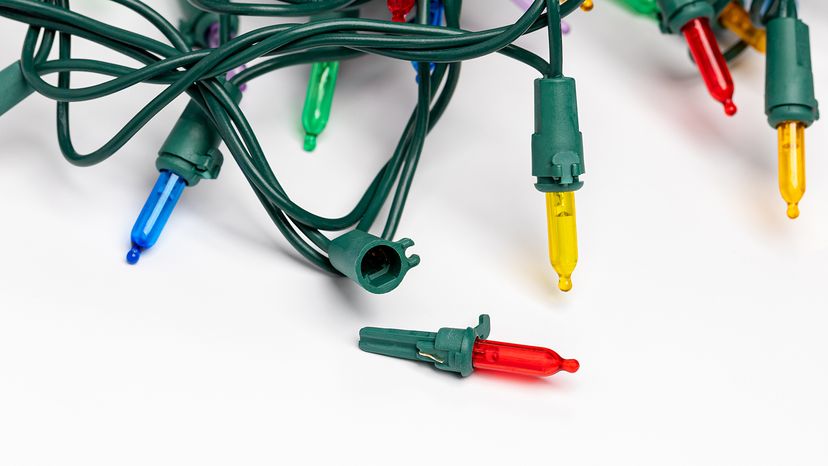
A burned-out bulb or faulty bulb can break the circuit in older incandescent lights. Start at one end and inspect each bulb. Look for darkened or broken filaments. Pull out and replace any suspicious bulbs with replacements of the same type.
If one bulb fails, it can cause all the lights on that circuit to go out.
Advertisement
For LED strings, a failed LED may not affect the whole string, but it could cause a bad section. These lights typically have multiple series-wired segments connected in parallel, so only one section of the string will go dark if an LED fails.
Step 4: Wiggle and Tighten Loose Bulbs
Loose bulbs are a common issue. Gently press each light into its socket to make sure it's fully seated.
If a bulb pops out easily or feels loose, replace it. A bad one or even one lamp out of place can interrupt the flow of electricity.
Advertisement
Step 5: Use a Light Tester or Voltage Detector
A light tester can help you find a bad bulb, especially in strings where half the lights work and the other half don't. The tool senses the electrical current and helps you pinpoint where the circuit breaks.
Once you've located the faulty bulb, replace it.
Advertisement
Step 6: Replace the Bad Section or Use Electrical Tape
If the string is broken and you can't fix Christmas lights by replacing bulbs or fuses, you might need to isolate the bad section. Do not cut out the non-working part to reconnect wires, as altering the number of bulbs can raise the voltage on the remaining lights and possibly blow them out.
If a string cannot be fixed by replacing bulbs or fuses, it is best to replace the entire light string.
Advertisement
If that sounds too risky, your best option might be to replace the entire string.
Step 7: Test Before Hanging
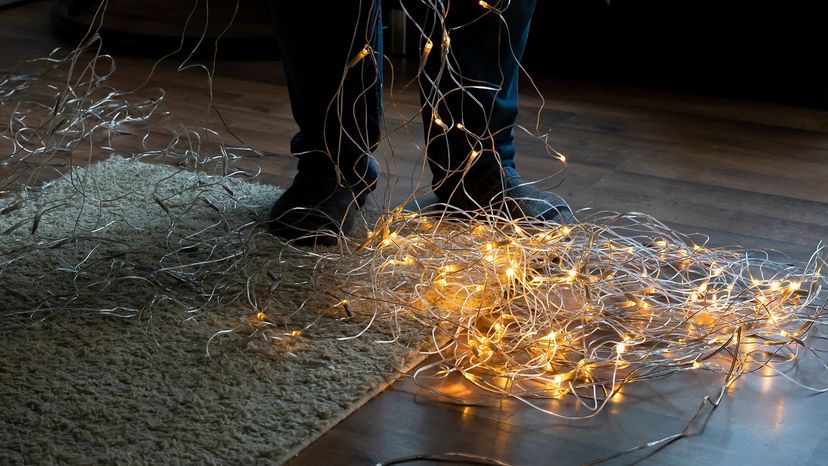
We know it can be a pain, but testing your lights before stringing them up can save you an even bigger headache down the line. Tanja Esser / Shutterstock
Before draping them over your Christmas tree or along the wall, plug in the fixed string and make sure all the lights work. Nothing's worse than decorating only to discover a section has failed.
Advertisement
4 Tips for Next Year
Store lights carefully to prevent wire damage.
Label broken strings for easy sorting.
Always keep spare bulbs and fuses.
Do not connect LED and incandescent light strings together on the same circuit, because the higher power draw of incandescent strings can overload and damage the LED strings.
With a little patience and know-how, you can revive those bad lights and bring holiday cheer back to your home. Merry Christmas and happy repairing!
We created this article in conjunction with AI technology, then made sure it was fact-checked and edited by a HowStuffWorks editor.
Advertisement
Cite This!
Please copy/paste the following text to properly cite this HowStuffWorks.com article: