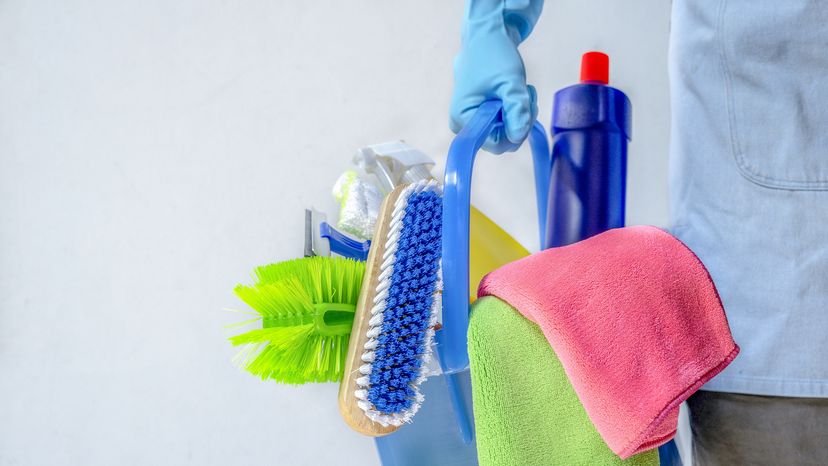
In order to treat stains and spots as soon as they occur, you have to be prepared. You should always have on hand the cleaning supplies and household products appropriate for treating the stains likely to occur in your home. Because many of these products are flammable or toxic, certain safety tips should be kept in mind when storing and using them.
  • Store stain-removing products carefully, out of the reach of children. The storage area should be cool, dry, and apart from food storage areas. Keep bottles tightly capped, boxes closed.

  • Do not transfer cleaning products to new containers. Keep them in their original containers so that you never have to search for directions for their proper use and so that they are always clearly labeled.

  • Follow the directions on the product label and heed all warnings.

  • Glass or unchipped porcelain containers are preferable to metal or plastic when working with stain-removal agents. Never use plastic with solvents. Never use any container that is rusty. Clean all containers thoroughly after use.

  • Protect your hands with rubber gloves and don't touch your eyes or skin while handling stain-removal chemicals. If you do accidentally touch your eyes, or spill chemicals on your skin, flush immediately with clear water.

  • Remember that the fumes of solvents are toxic; work in a well-ventilated area.

  • Do not use chemicals near an open flame or electrical outlet. Do not smoke while using chemicals.

  • Do not use a solvent as a laundry additive.

  • When using a solvent on a washable fabric, be sure to rinse all traces of the solvent out of the fabric.

  • Don't experiment with mixtures of stain-removal agents. Never combine products unless specifically directed to do so. Such combinations can be dangerous.

  • If the cleaning process requires the use of more than one stain-removal agent, rinse each out before applying the next.
In addition to the solvents, bleaches, detergents, and chemicals you'll probably need, there are certain items you should have ready for a spot or stain catastrophe. The following are the basic tools used in treating most stains:
  • Clean white cotton cloths

  • Disposable diapers, white blotting paper or paper towels

  • Spoon, blunt knife, or spatula

  • Eyedropper, trigger spray bottle, or mister (the kind used formisting houseplants)

  • Small brush

  • Several colorfast weights
Stain-Removal Agents

Check through the listing of stains in Chapter 5 for the stains that occur most frequently in your household. Read the treatment to find which of the following stain-removing agents you're most likely to need. Most are available at grocery stores, hardware stores, or pharmacies.

Absorbents

Substances used as absorbents "soak up" stains, especially grease stains. Materials used as absorbents include baking soda, cornstarch, cornmeal (usually considered the best for lighter colors), white talcum powder, or fuller's earth (best for use on darker colors, available at pharmacies and garden supply stores). Absorbents are used on light or new stains; they will damage neither fabrics nor other surfaces and they are easy to use. The absorbent material is spread on the stained area and allowed to work. As the grease is soaked up, the absorbent material will cake or become gummy. It should then be shaken or brushed off. The process should be repeated until most of the stain has been removed. Some light stains may be completely removed if the absorbent is left on for 8 hours or more.

Learn about types of bleaches you can use as stain removers in the next section.