Introduction to How Heat Pumps Work

©iStockphoto.com/gmnicholas
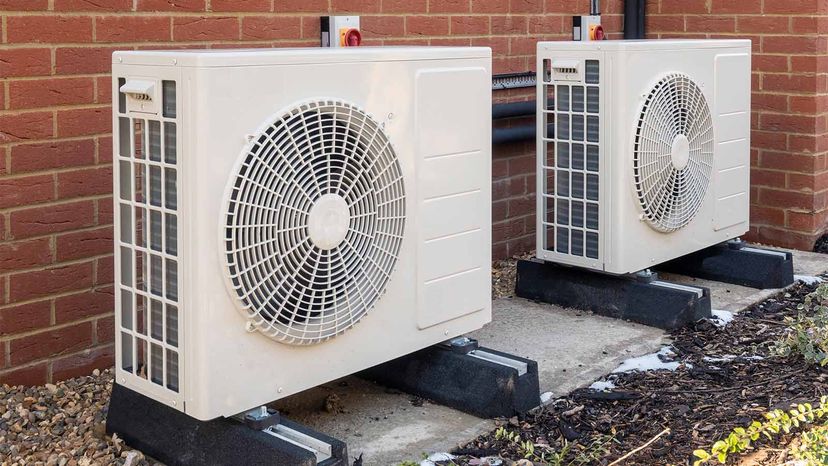
If you know how air conditioners work, you already know a little about how heat pumps work.
A heat pump is a device that uses a small amount of energy to move heat from one location to another. Heat pumps are usually used to pull heat out of the air or ground to heat a home or office building, or they can be switched into reverse to cool a building. If you know how an air conditioner works, you already know a lot about how a heat pump works, because heat pumps and air conditioners operate in very similar ways.
Heat pumps are a unique kind of heating system, because they can do the work of both a furnace and an air conditioner. Thus, there's no need to install separate systems to heat and cool your home. Heat pumps can also work extremely efficiently, because they simply transfer heat, rather than burn fuel to create it.
Heating & Cooling |
Heat pumps work best in moderate climates. If you live in a moderate climate, using a heat pump instead of a furnace and air conditioner may help you save money on your utility bill. Most heat pumps are somewhat limited by the cold, however, so it is important that you learn which kind of heat pump is best for your area before installing one in your home or office building. If you install the wrong kind of heat pump, you may end up paying even more in energy costs than you do already.
Read on to learn what's actually going on inside a heat pump.
Heat Transfer and Air-Source Heat Pumps
There are many different kinds of heat pumps, but they all operate on the same basic principle of heat transfer. Heat transfer means that rather than burning fuel to create heat, a device moves heat from one place to another. Heat naturally flows downhill, which means that it tends to move from a location with a high temperature to a location with a lower temperature. A heat pump uses a small amount of energy to switch that process into reverse, pulling heat out of a relatively low-temperature area, and pumping it into a higher temperature area. In a heat pump, this heat is transferred from a heat source (e.g. the ground or air) into a heat sink (e.g. your home).
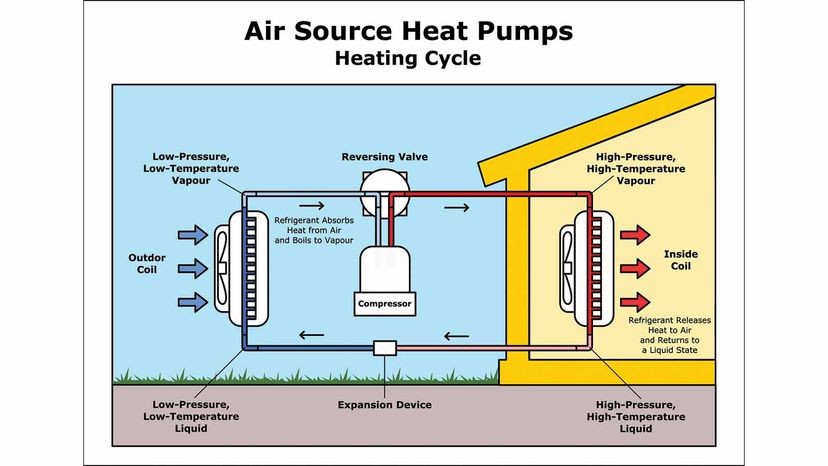
One of the most common types of heat pumps is the air-source heat pump, which takes heat from the air outside your home and pumps it inside through refrigerant-filled coils. Inside this basic heat pump, you'll find two fans, refrigerator coils, a reversing valve and a compressor.
Here's how this heat pump works:
This system is more commonly known as an air-air heat pump, because it takes heat from outdoor air and transfers it to indoor air ducts. With the proper modification, air-source systems can also work with other types of indoor heating systems.
The reversing valve is a very versatile part of a heat pump. It reverses the flow of the refrigerant, so that the system begins to operate in the opposite direction. Instead of pumping heat inside your home, the heat pump releases it, just like an air conditioner. The refrigerant now absorbs heat on the indoor side of the unit and flows to the outside, where the heat is released and the refrigerant cools and flows back indoors to pick up more heat.
Air-Source, Ground-Source, and Absorption Heat Pumps
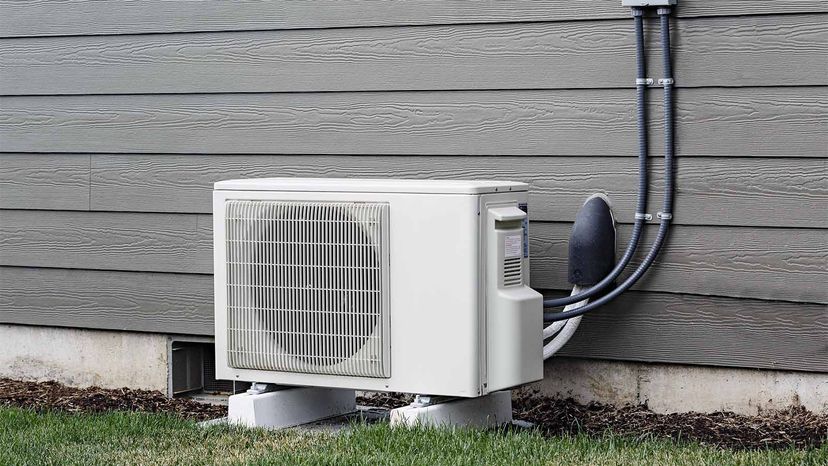
As we discussed in the previous section, air-source heat pumps use a fan in an outdoor unit to bring air over refrigerant-filled coils. Two sets of these coils transfer heat indoors, where the heat is blown away from the coils by another fan and distributed through a home. Some air-source heat pump systems consist of a single "packaged" unit containing both sets of coils in one box. This box is then installed on the roof of a building with the ductwork extending through the wall. Larger systems for commercial buildings often are installed in this way. Home heat pumps are usually "split" systems with an outdoor and indoor component installed through the wall. Depending on the type of system, there may be one or more indoor components to distribute heat.
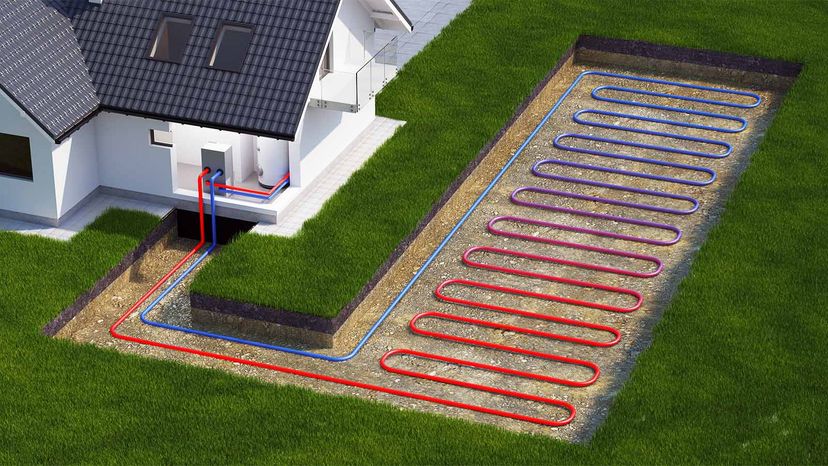
Ground-source heat pumps absorb heat from the ground or an underground body of water and transfer it indoors, or vice versa. The most common type of ground-source heat pump transfers heat directly from the ground by absorbing it through buried pipes filled with water or a refrigerant. Ground-source heat pumps that pump liquid through pipes can be either closed-loop or open-loop systems. In a closed-loop system, the same refrigerant or water circulates through the pipes repeatedly. In an open-loop system, water is pumped out of the water source, such as a well or a man-made lake, and when the heat has been extracted from the water, that water returns to the well or surface lake. More water is then pumped from the well to extract more heat.
Absorption heat pumps are air-source heat pumps that are powered by natural gas, solar power, propane, or geothermally heated water rather than by electricity. Absorption pumps can be used for large-scale applications, but are now available for large homes as well. The main difference between a standard air-source heat pump and an absorption pump is that rather than compressing a refrigerant, an absorption pump absorbs ammonia into water, and then a low-power pump pressurizes it. The heat source then boils the ammonia out of the water, and the process starts over. Manufacturers rate absorption heat pumps differently from standard heat pumps, using a measurement called a coefficient of performance (COP). Consumers should look for a COP above 1.2 for heating and above 0.7 for cooling. (We'll discuss ratings for standard heat pumps a little later.)
Air-source, ground-source, and absorption heat pumps are the most common kinds of heat pumps, but they won't work in every situation. Read on to learn about special kinds of heat pumps.
Other Kinds of Heat Pumps
If your home doesn't have air ducts to distribute heat, you could use a special kind of heat pump called a mini-split heat pump. A mini-split heat pump connects an outdoor air-source unit to multiple indoor units that in turn connect to water heat or space heaters. Ductless mini-split systems are useful for retrofitting a home with a heat pump system, as their locations outside and inside the home are flexible, and installation only requires a three-inch (7.6 cm) conduit to come through the wall. The indoor air handlers for a mini-split system may be installed in the wall, ceiling, or on the floor, and are relatively small.
Another special type of air-source heat pump is a reverse cycle chiller (RCC). Instead of heating and cooling air, this kind of heat pump heats and cools water. In an RCC system, the heat pump connects to an insulated water tank that it heats or cools. Then a fan and coil system pumps heated or cooled air away from the tank and through the ductwork to one or more heating zones. An RCC system can also pump hot water through a radiant floor heating system. In a typical air-source heat pump, a backup burner has to supply temporary heat when the system switches into reverse to defrost the coils. This backup burner prevents the system from blowing cold air through the registers while the coils defrost. The clever thing about an RCC system is that it uses the hot water from the tank to defrost the coils, so no backup burner is needed, and the system never blows cold air when it shouldn't.
A new type of heat pump showing promise for extreme climates is the Cold Climate heat pump, which operates efficiently at extremely low temperatures -- even below 0 degrees Fahrenheit (-18 degrees Celsius). The Cold Climate heat pump detects the minimum amount of energy needed to provide the desired level of heating or cooling and adjusts its output up or down, so it never wastes energy.
The All Climate heat pump is another new kind of pump, which can operate in temperatures as cold as -30 degrees Fahrenheit (-34 degrees Celsius) and can increase efficiency by up to 60 percent over a standard heat pump [source: EERE]. The All Climate heat pump is designed primarily for heating and won't work efficiently in climates where the heat pump would be in cooling mode most of the time.
Even special heat pumps have limitations. Read on to learn about the pros and cons of heat pumps, and what you need to know before buying one.
Pros and Cons of Heat Pumps

Charles Rex Arbogast/AP Images
Architect Frank Lloyd Wright's famed Unity Temple near Chicago was renovated in 2005 to include eco-friendly geothermal heating and cooling systems.
Heat pumps can help consumers save on utilities, but they have limitations. First, they tend to be somewhat ineffective in any climate where the outdoor air temperature falls near or below freezing on a regular basis. This is because moving heat from a very cold area to a hotter one takes more energy than moving heat between two areas with a more moderate temperature difference. There's also more heat available outside in a moderate climate than in a cold climate. It's important to note that even in a cold climate, there's still heat in the outside air to be pumped indoors, but the unit needs to work harder to extract the heat that is available. Supplemental energy may be required to make the heat pump produce enough warmth to comfortably heat your home when the temperature falls below freezing.
The heat produced by heat pumps isn't as intense as the heat produced by a gas or oil-burning furnace. Some people used to traditional furnaces are uncomfortable with the milder heat produced by these systems. Other people prefer the warmth produced by heat pumps, because heat pumps distribute heat evenly throughout the house, meaning there are no cold spots. A heat pump also should turn on and off less often than a gas furnace, and most systems have eliminated the blowing of cold air through the vents that used to occur when the system temporarily switched into reverse to defrost the coils.
Before you install a heat pump, you will need to consider what kind of supplemental or backup heating you may need to use when the heat pump can't work efficiently. Many heat pumps use supplemental electrical heating, but you might also use some kind of oil burner or an adapted gas furnace. Whatever type of heating system is common in your area is likely the most efficient and cost-effective backup method.
Ground-source heat pumps are better dehumidifiers than normal air conditioners, because these systems typically have a larger, flat return coil that conditions and dehumidifies more air than the corresponding coil in an air conditioning system. Air-source heat pumps have about the same dehumidifying capabilities as air conditioning systems. You will need to consider any humidifying or dehumidifying needs your home has and select your system accordingly.
Now that you know the pros and the cons of heat pumps, read on to learn what to look for when you buy a heat pump.
What to Look for in a Heat Pump
When you start shopping for a heat pump, there are a few things you need to look for. First, manufacturers rate the efficiency of most heat pumps in two ways: SEER and HSFP ratings. Higher SEER and HSFP ratings indicate a more efficient unit.
- SEER stands for Seasonal Energy Efficiency Rating, and is a ratio of how much energy (measured in BTUs) is pumped outside in cooling mode divided by the electricity used (in watts) for cooling. Look for a SEER rating between 14 and 18.
- HSFP stands for Heating Seasonal Performance Factor. It calculates the ratio of energy pumped indoors for heating to energy used for heating, but it's a more complicated equation than the SEER rating because it also takes into account supplemental heating needs and the energy used to defrost the unit. Look for an HSFP rating between 8 and 10.
Heat pumps often feature options that make them more efficient. These include:
- A desuperheater coil that heats water by recycling waste heat (or on an RCC system, a refrigerant heat reclaimer that also uses the pump's extra capacity to heat water during mild winter weather).
- Dual-mode compressors and motors that save energy by adjusting up or down according to the level of heating or cooling needed.
- Scroll compressors that are quieter, more efficient and last longer than traditional compressors.
Though many of these features can only be found on more expensive heat pumps, they make up for the initial expense by helping heat pumps work more efficiently and save more energy throughout the pump's life.
You now know how to buy a heat pump, but will it really save you money?
Do Heat Pumps Save You Money?
The cost to install and run different kinds of heat pumps varies widely. Geothermal or ground-source heat pumps are more expensive to install than air-source heat pumps, because ground-source pumps require you to dig down to a heat source and involve more complex heat transfer systems. Expect to pay as much as $5,000 to $7,500 for a ground-source heat pump system. Air-source heat pumps can be found for much cheaper, averaging around $1,500 to $4,000, because the units tend to be simpler, and installation is much easier.
The cost required to run and repair a heat pump varies with the type of system. It is less expensive to run a ground-source heat pump, because the ground and water have a relatively constant temperature that allows the heat pump to operate efficiently. Ground-source systems also have the advantage of not being exposed to the outdoor weather, which prevents a lot of wear and tear. On the downside, they can be costly to repair if you need to access an underground portion of the system. Air-source systems are easy to access and service, but they may need more regular maintenance because they are exposed to the elements. Also, air-source heat pumps may use more supplemental energy to run, especially in colder climates, and this will cost you more on your utility bill.
Heat pumps may save you anywhere between 30 and 40 percent or more on your utility bill, but neglect will reduce a heat pump's efficiency over time [source: EERE]. It's important to factor in the climate where you will be using the heat pump to make sure you select a system that can run efficiently in your area.
Heat pumps can save you a lot of money on utilities if you install the right kind of pump for your area.
Read on to find out the cost of running and repairing your new heat pump.
Heat Pump Maintenance
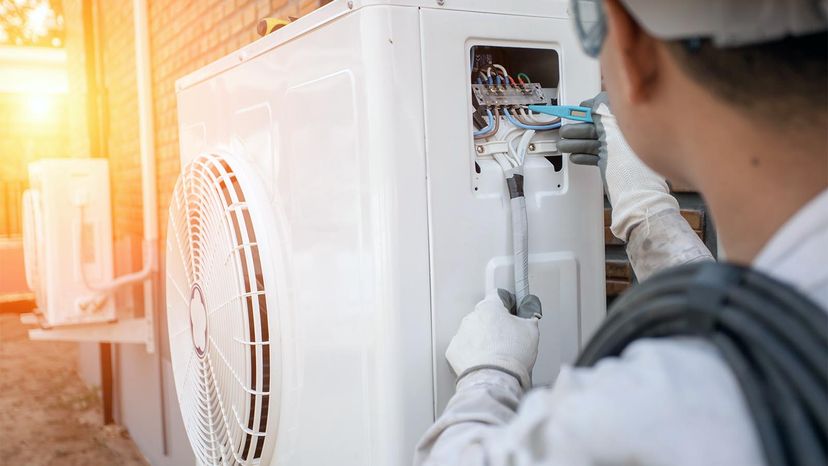
If you use your heat pump on a regular basis, you should change the filter about once a month. You could probably get away with only changing the filter once every three months if you only run the unit periodically. Keep fans and coils clean and free from debris, and have your heat pump inspected by a professional once every year or two.
Common problems with heat pumps include low airflow, leaky or noisy ducts, temperature problems, using the wrong refrigerant charge, rattles, squeaks and grinding noises. If you can, try to isolate the location of the problem. Is the airflow only low coming out of one register, or do all registers have low airflow? Is the offending noise coming from the air ducts or within the heat pump unit itself?
There are a few things you can do to identify and possibly fix a heat pump problem before calling for professional help. First, if the unit isn't working, try resetting the motor on the unit. Check the pump ignition system for problems, and make sure you don't have a tripped circuit breaker or blown fuse. Check the thermostat to make sure it is working properly. Change the filter if it's dirty, and make sure there are no airflow blockages. If the air ducts are making noise when they expand and contract, you could try putting a dent in the side of the duct to make the surface more rigid. Rattles may be fixed by fastening loose parts, and if you're hearing squeaks inside the unit, you may need to replace or adjust the fan belt connecting the motor and the fan. A grinding noise may indicate that the bearings on the motor are worn out, which will require the help of a professional to fix.
Because heat pumps can contain hazardous materials, don't try to fix a major problem with your heat pump without professional assistance, as you may cause a chemical leak or injure yourself handling a broken device.
A heat pump should last between 10 and 30 years. Some components of ground-source heat pumps can last even longer. Keep in mind that technology may change before your heat pump has worn out, so you may find your heat pump outlasts a technician's ability to service it. New technologies may make heat pumps safer or more efficient, so you may wish to keep an eye out for new kinds of heat pumps.
To learn more about heat pumps, check out the links on the next page for lots more information.
Lots More Information
Related HowStuffWorks Articles
- How Air Conditioners Work
- How does a dehumidifier work?
- Heating and Cooling System Basics
- Is there a way to get energy for free?
- How to Troubleshoot a Heat Pump
- How Radiant Floor Heating Works
More Great Links
- The Air-Conditioning, Heating, and Refrigeration Institute
- Enercom's Energy Calculator
- The Energy Information Administration
Sources
- Ask the Builder. "Heat Pump Facts." 8/21/2008. http://www.askthebuilder.com/B294_Heat_Pump_Facts.shtml
- BGE. "How Heat Pumps Work." 8/6/2008. http://www.bge.com/portal/site/bge/menuitem.caa6f77e2c573a0021b08424025166a0/
- Cost Helper. "Heat Pump Cost." 11/2007.
http://www.costhelper.com/cost/home-garden/heat-pump.html - Enercom. "Heat Pumps." 8/6/2008.
http://www.energyright.com/heatpump/index.htm - Energy Star. "Air-Source Heat Pumps." 8/7/2008. http://www.energyright.com/heatpump/index.htm
- Energy Star. "Geothermal Heat Pumps." 8/7/2008. http://www.energystar.gov/index.cfm?c=geo_heat.pr_geo_heat_pumps
- Environmental Protection Agency. "What You Should Know About Refrigerants When Purchasing or Repairing a Residential A/C System or Heat Pump." 6/3/2008. http://www.epa.gov/Ozone/title6/phaseout/22phaseout.html
- Heat Pump Centre. "Heat Pumps in Industry." 6/30/2008. http://www.heatpumpcentre.org/About_heat_pumps/HP_industry.asp
- Home Tips. "Heat Pumps." 8/6/2008.
http://www.hometips.com/heatpumps-airsource.html - Home Tips. "Heat Pump Repairs." 8/6/2008. http://www.hometips.com/cs-protected/guides/heatpumpfix.html
- Michigan Energy Services. Personal interview. Conducted 8/21/2008. http://www.energypath.com/
- NZPA. "Heat pumps blamed for power bill rise." The New Zealand Herald, 8/1/2008. http://www.nzherald.co.nz/section/1/story.cfm?c_id=1&objectid=10524722
- Wheeler, Jim. "How Heat Pumps Work." HGTVPro.com, 8/6/2008. http://www.hgtvpro.com/hpro/dj_technology/article/0,,HPRO_20157_4074516,00.html
- U.S. Department of Energy. "Heat Pump Systems." 9/12/2005. http://www.eere.energy.gov/consumer/your_home/space_heating_cooling/index.cfm/mytopic=12610