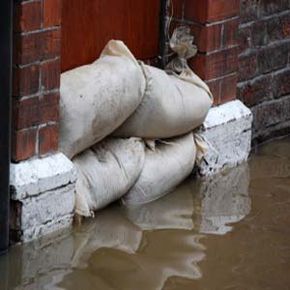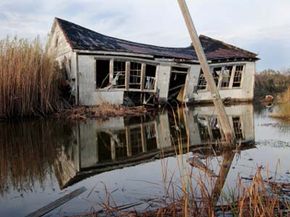
The terrifying triumvirate of tornadoes, hurricanes and wildfires represents the worst-case scenarios for most homeowners. Yet the natural disasters that strike most often in the United States are floods. No matter your surrounding geography -- whether situated in wooded lowlands by a river or in higher-elevation suburbia -- flooding can happen. That's because it doesn't require an exclusive set of weather conditions for one to occur. Flooding can result from the effects of melting snow, breached dams and levees, excess rainfall and improper landscaping.
Although flooding can happen practically anywhere, certain landscapes are more prone to it than others. Areas most susceptible to flooding (usually due to a nearby body of water) are referred to as floodplains. The statistical frequency of flooding on a floodplain is denoted by a certain number of years, such as a 100-year floodplain. That figure indicates the probability of floods occurring in consecutive years, rather than the average number of years between them. For example, when flooding occurs on a 100-year floodplain, there is a 1 percent chance of it taking place the following year [source: Organization of American States]. And in the case of a 20-year floodplain, there's a 5 percent chance of repeat floods.
Advertisement
Whether your house is on a floodplain or not, a massive deluge can inflict devastating destruction. And as the floodwaters rise inside of a house, so does the amount of damage. According to the National Flood Insurance Program, even one inch (2.5 centimeters) of floodwater can necessitate $7,800 in repairs. Saturated paneling and floors become warped and disconnected from their foundations. Furniture and appliances have little chance of surviving the soaking unscathed. As time lapses, mildew begins to grow in the damp conditions.
In the case of rapid flash flooding, it may seem like there's little you can do to batten down the hatches against the rising tide. Floods that build up more gradually, like the one that ransacked Fargo, N.D., in the spring of 2009, leave slightly more room for preparation. Though as demonstrated with the icy conditions in Fargo, the weather might not allow much leeway for emergency measures.
Extreme alternatives of elevating or relocating your house are costly and time-intensive. Instead, with minimal upkeep, proper landscaping over time and a few buckets of waterproof sealant, you can convert your house into a fortress against floodwaters.
Advertisement