Key Takeaways
- Home thermostats regulate heating and air conditioning systems in your house, impacting energy usage and comfort. They've evolved from simple mercury switch devices to digital and programmable models, allowing for greater control over indoor climate and energy savings.
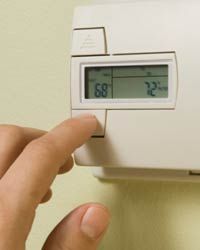
- Early thermostats used a mercury switch and bimetallic strips to control temperature. Modern digital thermostats use thermistors for temperature measurement, offering features like programmable settings, system zoning and even remote control via smartphone apps.
- Innovations like talking thermostats aid those with visual impairments by announcing settings and temperatures, while telephone thermostats and smart thermostats offer remote control, enhancing convenience and efficiency.
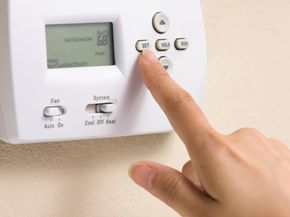
If you have specific heating and cooling needs in order to be comfortable then you've probably spent a little time looking at and operating your home thermostat. This handy little device controls the heating and air-conditioning systems in your house -- the two pieces of equipment that use the most energy, and the ones that have the biggest impact on your comfort and quality of life. In these days of rising energy prices, you might be interested to see how your thermostat works. Believe it or not, it's surprisingly simple and contains some pretty cool technology.
In this article, we'll take apart a household thermostat and learn how it works. We'll also learn a little about digital thermostats, talking thermostats, telephone thermostats and system zoning.
Advertisement
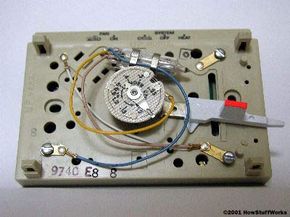
Modern thermostats are almost exclusively digital, but before we get to those, let's take a trip down memory lane and look at the parts of a non-digital thermostat that you might still find in older homes and motels. Let's start with the mercury switch -- a glass vial with a small amount of actual mercury inside. Mercury is a liquid metal -- it conducts electricity and flows like water. Inside the glass vial are three wires. One wire goes all the way across the bottom of the vial, so the mercury is always in contact with it. One wire ends on the left side of the vial, so when the vial tilts to the left, the mercury contacts it -- making contact between this wire and the one on the bottom of the vial. The third wire ends on the right side of the vial, so when the vial tilts to the right, the mercury makes contact between this wire and the bottom wire.
There are two thermometers in this kind of thermostat. The one in the cover displays the temperature. The other, in the top layer of the thermostat, controls the heating and cooling systems. These thermometers are nothing more than coiled bimetallic strips. And what's that, you ask? We'll find out on the next page.
Advertisement