Rubber Plant

Rubber plant requires plenty of light to thrive but can survive in less than ideal conditions for a while.

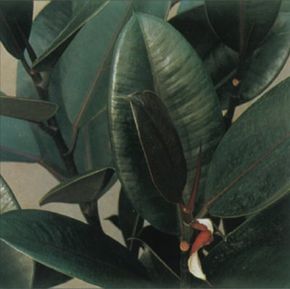
Picture of thick, leathery green leaves, rubber plant.
Rubber plant is characterized by its thick, leathery leaves.
See more pictures of house plants.

The rubber plant produces large, oblong, thick, leathery, dark green leaves, often with a red mid-vein. Many cultivars with variegated foliage are available. Although usually seen with a single trunk, the rubber plant can be pinched back and encouraged to branch.

This plant can survive for long periods of time in low light, but it begins to lose its lower leaves. Since these are never replaced, it is better to consider the rubber plant as one requiring high light.

Rubber Plant Quick Facts

Scientific Name: Ficus elastica
Common Name: Rubber Plant
Light Requirement for Rubber Plant: Full Sun to Bright Light
Water Requirement
for Rubber Plant: Drench, Let Dry
Humidity
for Rubber Plant: Average Home
Temperature
for Rubber Plant: House
Fertilizer
for Rubber Plant: Balanced
Potting Mix
for Rubber Plant: All-Purpose
Propagation of Rubber Plant: Air Layering, Stem Cuttings
Decorative Use
for Rubber Plant: Floor, Table
Care Rating
for Rubber Plant: Demanding

Want to learn about house plants by type? Try these:

Learn how to care for house plants:

ABOUT THE AUTHOR:

Larry Hodgson is a full time garden writer out of Quebec City in the heart of French Canada where he grows well over 3,000 species and varieties. His book credits include Making the Most of Shade, The Garden Lovers Guide to Canada, Perennials for Every Purpose, Annuals for Every Purpose, Houseplants for Dummies, and Ortho's Complete Guide to Houseplants, as well as other titles in English and French. He's the winner of the Perennial Plant Association's 2006 Garden Media Award.