Key Takeaways
- Using a simple motor-driven fan and a heating element, hair dryers blow hot air over wet hair to accelerate water evaporation.
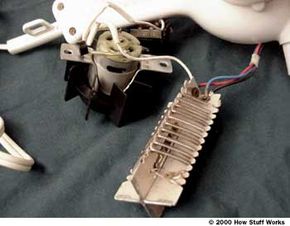
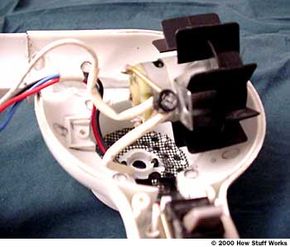
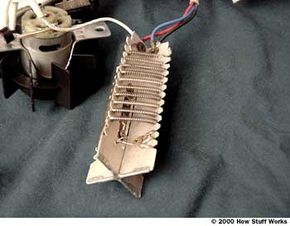
- The heating element is usually a bare, coiled wire that heats up due to electrical resistance. The fan then blows air over this element, warming it before it exits the dryer to contact the hair.
- Since their invention in the 1920s, safety features in hair dryers have significantly improved, including the introduction of Ground Fault Circuit Interrupters (GFCI) to prevent electrocution by instantly cutting off power if the dryer comes into contact with water.
Many people are familiar with the daily routine of washing, drying, and styling their hair. Although hair will eventually dry on its own if given enough time, most people reach for a hair dryer to speed up the process. While science may have disproven the link between wet heads and catching colds, it's still no fun to sit around with a head full of wet hair, especially in the winter.
Hair dryers, also known as blow dryers, were first sold in the 1920s. At first they were pretty dangerous to use -- hundreds of people were electrocuted when they dropped their hair dryer into water-filled sinks and bathtubs.
Advertisement
That isn't as likely today, however, because of the advent of Ground Fault Circuit Interrupters (GFCI). Since 1991, all portable hair dryers have been required by U.S. federal law to protect you against electrocution should you accidentally drop one in water while it's plugged in [source: CSPC]. This applies whether the hair dryer is on or off. A GFCI is the larger, polarized plug that you'll find on many consumer appliances. When they're plugged in, GFCIs monitor the amount of current that's running from one slot of a wall outlet through an electric circuit and back to the other slot. If they sense a leak in the current, they trip the circuit. (See How does a GFCI outlet work? for details).
What happens to a hair dryer if you drop it in water when it's not plugged in? You don't run the risk of electrocution, since there's no source of current, but you can certainly damage the hair dryer if all of its components get wet. So, plugged in or not, it's a bad idea to throw it in the tub.
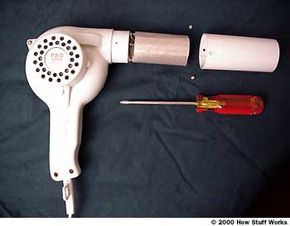
Have you ever wondered what those components are inside a hair dryer that lets you blow hot air through your hair without burning your scalp? Keep reading to find out why you won't sizzle.
Advertisement